Amethyst
Additionally, in all major Bible translations used for comparison purpose in this series, the word achlamah is translated "amethyst" with the NLT adding that it was the color purple.
The twelfth foundation gemstone used in the New Jerusalem (Revelation 21:20) is called in the Greek amethustos (Strong's #G271), which is used only in this verse. It means a rock that is believed to prevent intoxication or make someone "not drunk." Strong's and Thayer's Lexicon translates this word as "amethyst," with Thayer's adding it has both a violet and purple color.
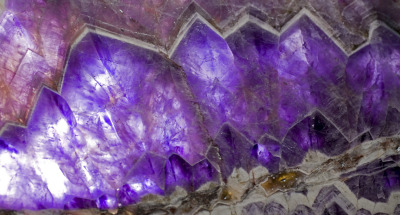
This gemstone is a variety of quartz that is violet (purple) colored. It was highly prized by the ancient Egyptians.
Folklore
Anciently, it was believed that any intoxicating liquid drunk from a cup composed of amethyst would render the drink unable to cause someone to be drunk. Amulets made of the rock were also worn to counteract the effects of wine. In the Middle Ages, it was considered a pious gem and used by the Church.
In the fifteenth century A.D., amethyst was believed to control evil thoughts, make a person generally smarter and give them the ability to be a shrewd in business. It also, according to legend, gave soldiers the ability not to be harmed in battle and be victorious over their enemies. It was also believed to aid those in capturing wild animals (Curious Lore of Precious Stones, page 58).
Series References
1913 Catholic Encyclopedia
Curious Lore of Precious Stones, 1913 ed.
Diamonds, Pearls and Precious Stones, 1913 ed.
Gemstones in the Breastplate, 2008 ed.
Smithsonian National Museum of Natural History
United States Geological Survey
Gemdat.org - Mindat.org - Wikipedia
Quotes in this series taken from
Holy Bible in Its Original Order
unless noted.
Some images used in this
series are courtesy of the
Smithsonian Minerals, Gems Collection.