Psalm 136: Repeated Thanks and Remembered Deliverance
Psalm 136 gives a sustained reason for thanksgiving: the Lord’s mercy endures through creation, Israel’s deliverance, remembered distress and the provision of food. Its repeated refrain connects these subjects. The chapter number helps a reader find the poem; the poem’s words explain what it teaches.
This study also returns two word-study examples to their settings. Joseph’s sale and Potiphar’s purchase belong to a sequence of events, while the KJV’s “captain of their salvation” describes Jesus in a different argument. Putting those passages beside a painting can clarify what each source actually shows.
What Does the Refrain Connect?
Every verse of Psalm 136 ends with the KJV wording “for his mercy endureth for ever.” The repetition is attached to particular reasons for thanks. Reading only the refrain would miss how the reasons develop; reading only the events would miss the response that holds them together.
| Verses | Reason for thanks | Connection |
|---|---|---|
| 1–3 | The Lord is good, God of gods and Lord of lords. | The opening identifies the one being thanked. |
| 4–9 | Wonders, heavens, earth, sun, moon and stars. | The praise extends to creation and its ordered lights. |
| 10–16 | Egypt, departure from slavery, the Red Sea and the wilderness. | Israel's deliverance is remembered through a sequence. |
| 17–22 | Kings defeated and their land given as an inheritance to Israel. | The wilderness account continues toward the inheritance. |
| 23–25 | Remembrance in low estate, rescue from enemies and food for all flesh. | The poem moves from named events to need and provision. |
| 26 | Thanks to the God of heaven. | The closing renews the opening invitation. |
The food given to “all flesh” in verse 25 broadens the final outlook beyond the named kings and Israel’s inheritance. The refrain accompanies both extraordinary deliverance and a continuing creaturely need. It does not make the sun, a military victory and a meal interchangeable events.
Why Keep the Difficult Parts of the History?
Verses 10–22 include the death of Egypt’s firstborn, Pharaoh’s army overthrown in the sea, and the deaths of kings. A reading that presents the psalm only as a pleasant description of nature would leave out a substantial part of its argument. The poem interprets Israel’s deliverance and inheritance as reasons for thanks, including judgment against its opponents.
Sihon and Og are named in verses 19–20 before the inheritance is mentioned in verses 21–22. The refrain does not erase the distinction between the people receiving the land and those losing it. These verses belong to the history the poem remembers; they do not supply a number-based instruction for a reader’s present conflict.
For a closer reading, mark where the wording changes from named rulers to “us” in verse 23, then to “all flesh” in verse 25. That shift helps explain the ending more directly than assigning a hidden meaning to 136.
A Painting of the Sale: What Can Be Checked?
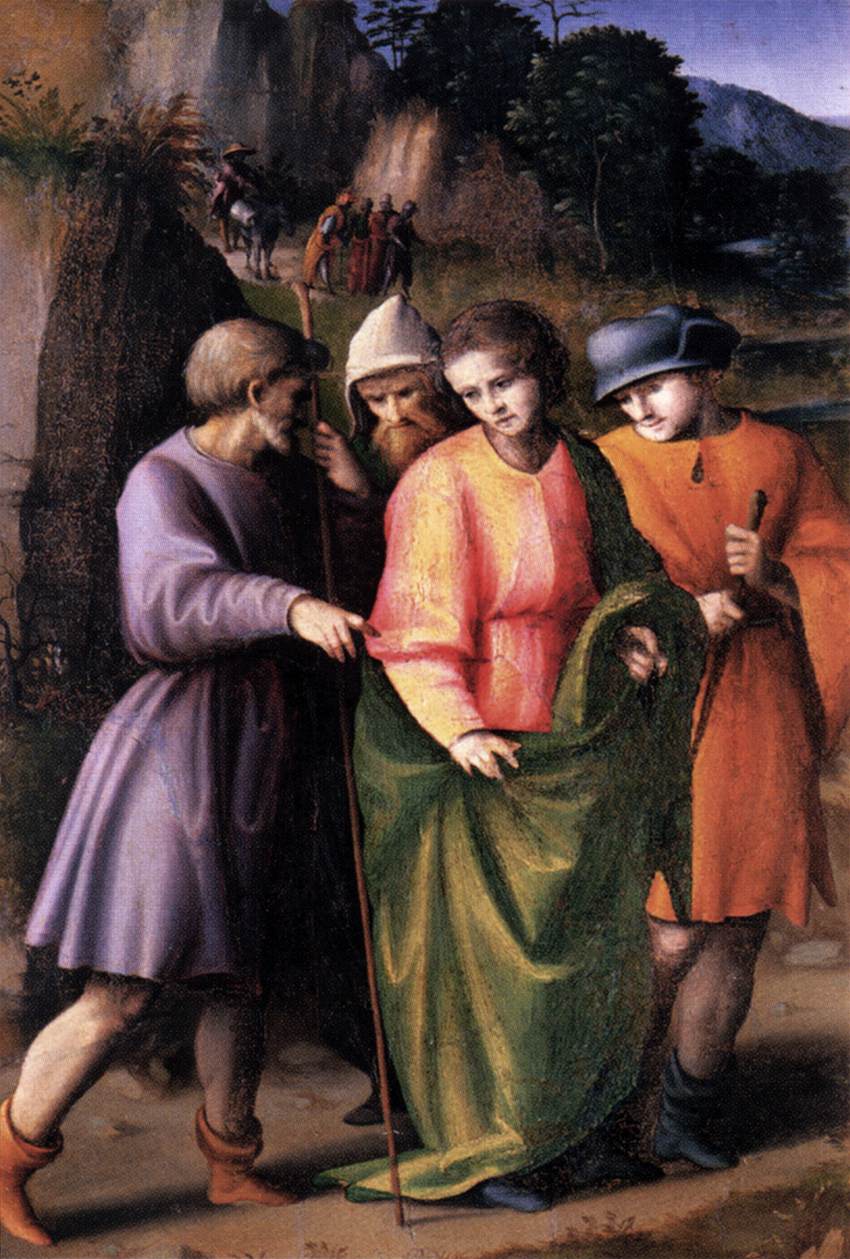

Start with Genesis 37:12–36, then read 39:1–6. In chapter 37, Joseph goes to find his brothers, is stripped of his coat and put in a pit. Judah proposes selling him; the text then describes traders, a price of twenty pieces of silver and his removal to Egypt. Chapter 39 begins with Potiphar buying him in Egypt and continues with Joseph serving in Potiphar’s household.
The painting’s title places it with Joseph’s sale. Its central young man, the surrounding men and the travellers in the background give points to compare with the narrative. The clothing and arrangement remain the artist’s interpretation: they cannot identify every foreground person by name or prove that a particular man is Potiphar. Nor does a picture with three men around Joseph establish how many brothers took part.
The merchant names require attention to the wording itself. Genesis 37:25 and 27 name Ishmaelites; verse 28 mentions Midianite merchants and sale to Ishmaelites; verse 36 names Midianites selling Joseph to Potiphar. Genesis 39:1 names Ishmaelites as those from whom Potiphar bought him. Record those references before proposing how the groups and transactions relate. The painting cannot resolve that textual question by costume or face.
Why Does the Same English Word Need More Than a Count?
Genesis 39:1 calls Potiphar “captain of the guard.” Hebrews 2:10 calls Jesus “the captain of their salvation.” Reading Hebrews 2:5–18 shows the second expression within an argument about Jesus’ suffering, death, shared humanity, deliverance from bondage and help for those being tempted. It does not assign him Potiphar’s position in an Egyptian household. A shared KJV word is a starting point for comparison; the surrounding sentences determine its function.
The same method applies to honour and praise. Exodus 20:12 commands honour toward father and mother within the commandments addressed to a people brought out of Egypt. Matthew 21:12–17 places children’s praise amid Jesus’ temple actions and healing, and the objection of the chief priests and scribes. Luke 18:35–43 ends with a man receiving sight, following Jesus and glorifying God, while the people give praise. Each passage supplies an action, an audience and a reason.
Word totals and numbered concordance entries answer different reference questions from these readings. A count requires a specified text and rules for spelling, inflections and verses; an entry number is a dictionary locator. Neither establishes that the passages assign a spiritual character to the integer 136.
Sources and Reading Limits
- Primary reading, King James Version: Psalm 136:1–26; Genesis 37:12–36 and 39:1–6; Hebrews 2:5–18; Exodus 20:1–17; Matthew 21:12–17; Luke 18:35–43.
- Artwork and image terms: the linked Commons file record identifies Bacchiacca’s sale painting and declares CC BY-SA 3.0. The image credit includes the source, uploader and license; the complete image is reproduced unchanged.
- The painting supports a comparison with the narrative. It is not a record made at the event, a diagram of all participants, or evidence for a hidden number meaning. The sale and Potiphar’s purchase should remain distinct stages in the reading.
Return to reading Bible numbers in context.
Prepared by the LetsLearnTheBible.com editorial team. Read the whole psalm and the complete narrative ranges before drawing connections between individual words.